Key Takeaways
- Day trading strategies replace guesswork with clear, repeatable rules for entering, exiting, and sizing every trade.
- Different strategies fit different trading windows, whether you trade sudden news momentum or slower horizontal ranges.
- Capping risk at 1% per trade and using daily drawdown limits prevents emotional decision-making and severe losses.
- Testing your trading plan on historical data and a demo account helps build execution discipline without risking real money.
Table of Contents
- What is a day trading strategy?
- Top intraday day trading strategies
- Building a disciplined day trading system
- Selecting & testing intraday trading techniques
- Regional regulations & margin frameworks
What is a day trading strategy?
A day trading strategy gives traders a clear plan for buying and selling financial assets within the same day. The goal is to profit from short-term price movements in markets like forex, commodities, indices, and shares, and avoid overnight market moves and overnight financing fees (swaps).
Unlike long-term investing or multi-day swing trading, day trading relies on strict execution rules, defining when to enter a trade, where to place a protective stop-loss , where to take profits , and how to size the position based on account balance.
Top day trading strategies
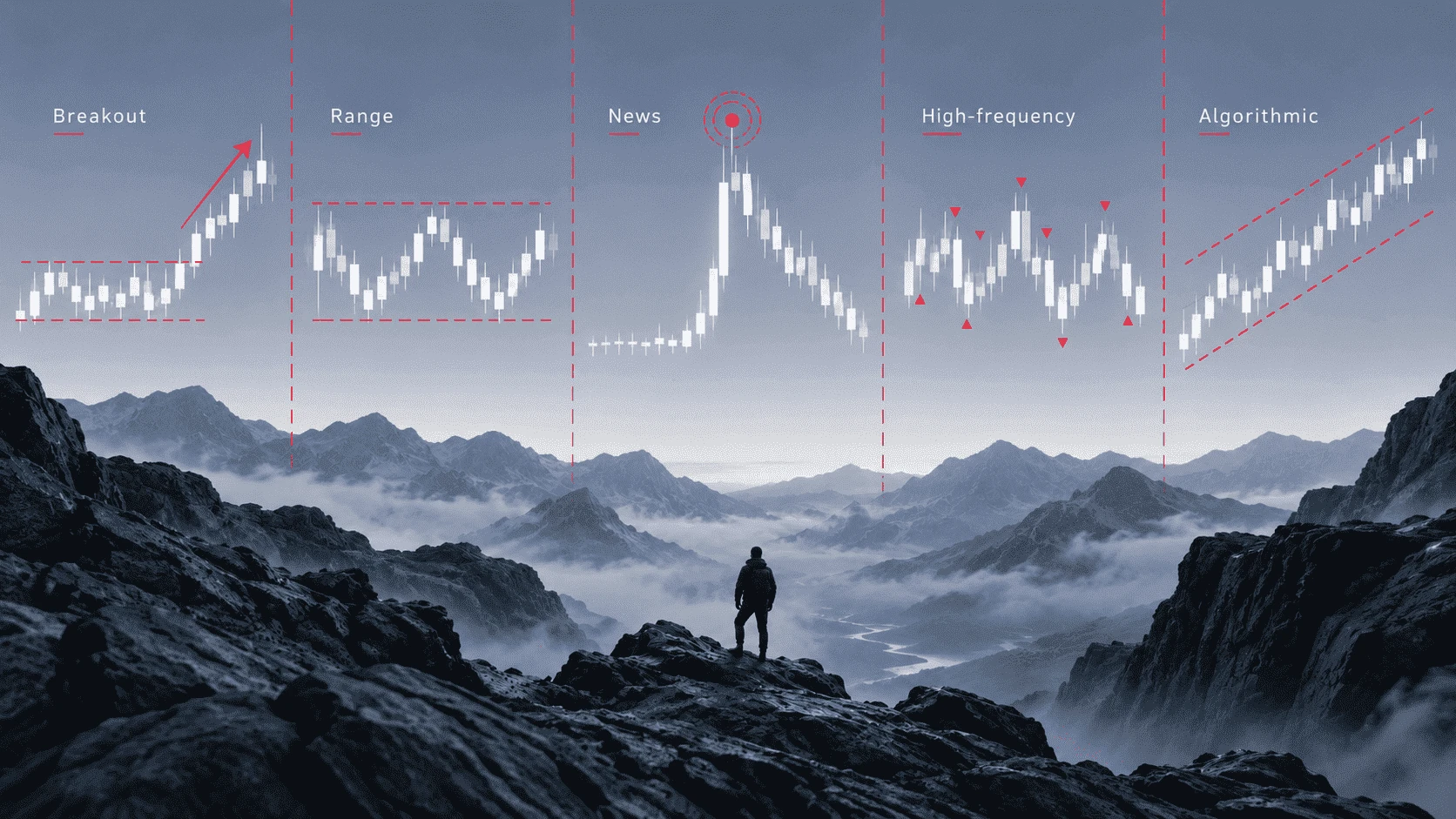
Choosing the right strategy comes down to trading style, market volatility , and available trading hours . Below are five popular day trading techniques used in intraday markets.
1. Breakout trading
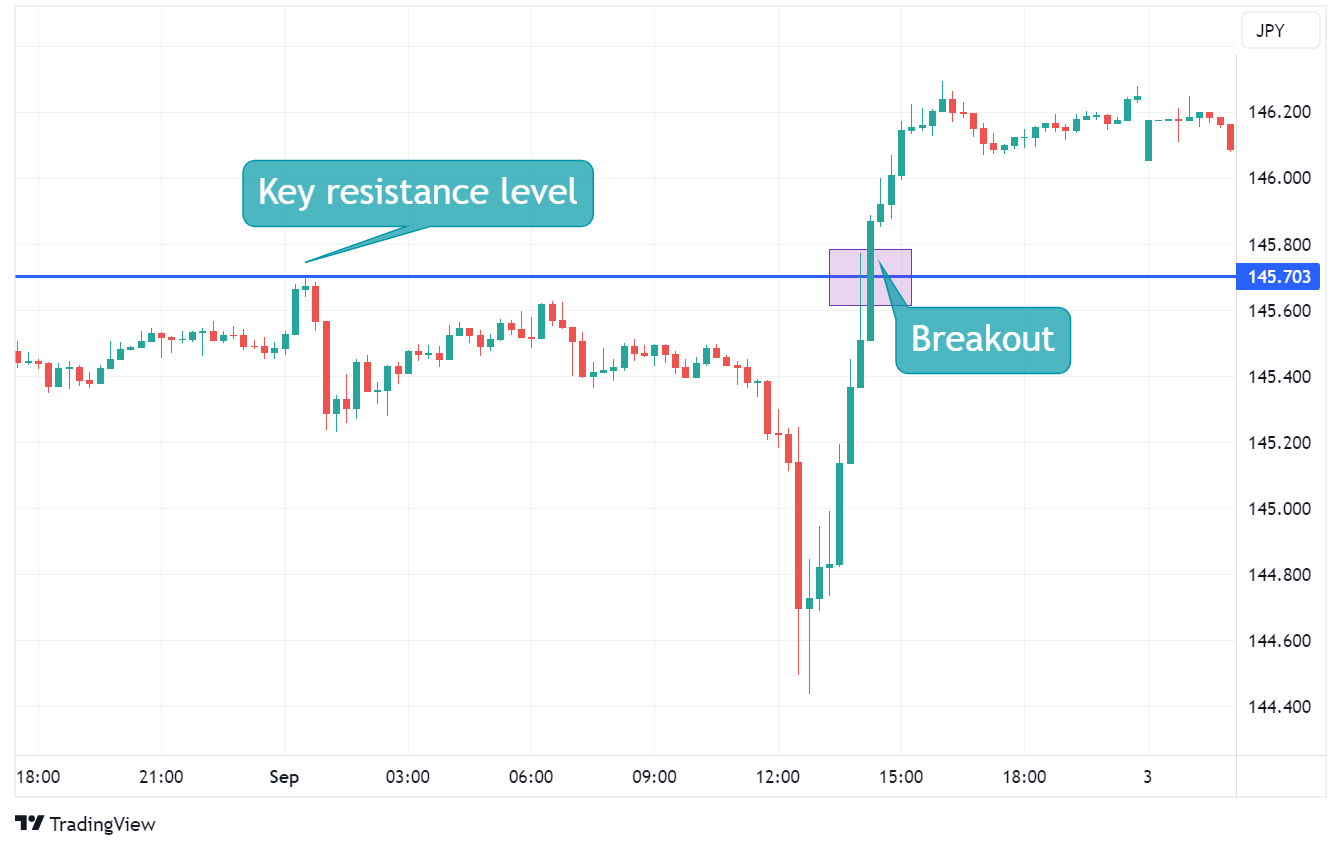
Breakout trading looks to catch quick price moves when an asset breaks out of a tight consolidation range or key chart level.
- Setup : Find key support and resistance levels or patterns (like triangles and channels) that the price has tested multiple times.
- Trigger : Enter a buy trade when the price breaks above resistance, or a sell trade when it breaks below support with high trading volume.
- Confirmation : Combine price action with tools like the Volume-Weighted Average Price (VWAP) or moving averages (such as the 9 EMA or 20 EMA) to confirm market volume supports the move.
- Risk control : Place a stop-loss inside the consolidation range to protect against false breakouts, and set take-profit targets at major technical levels.
2. Range trading
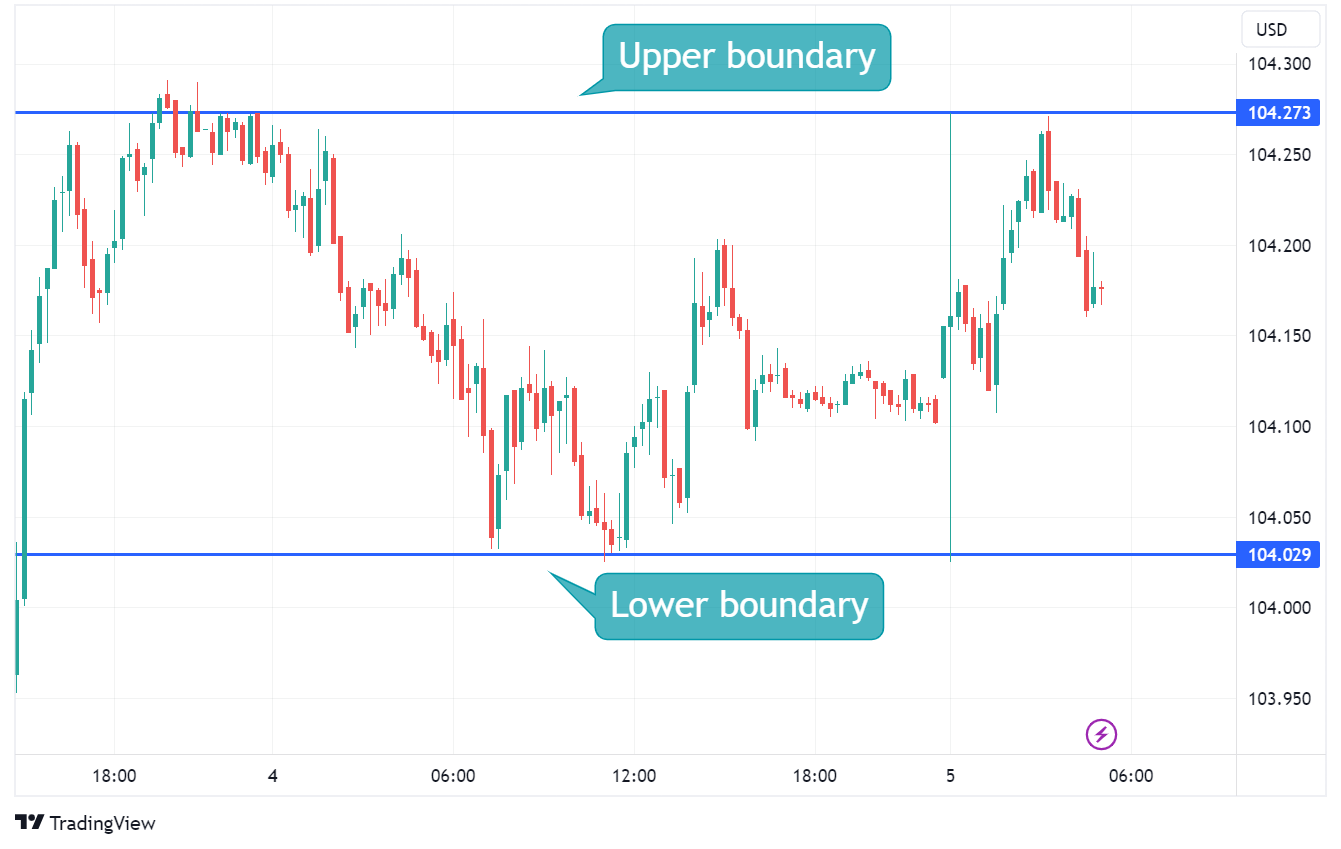
Range trading aims to profit when prices move back and forth between well-defined support and resistance levels in a sideways market.
- Setup : Identify an asset moving within a clear horizontal channel with consistent high and low boundaries.
- Trigger : Buy when the price approaches the support floor or sell when it nears the resistance ceiling.
- Validation : Use momentum oscillators like the Relative Strength Index (RSI) to confirm turning points (e.g., buying when RSI drops below 30 into oversold territory, or selling when RSI rises above 70 into overbought territory).
- Risk control: Set stop-loss orders just outside the support or resistance levels to exit if the price breaks into a new trend.
3. News and event trading
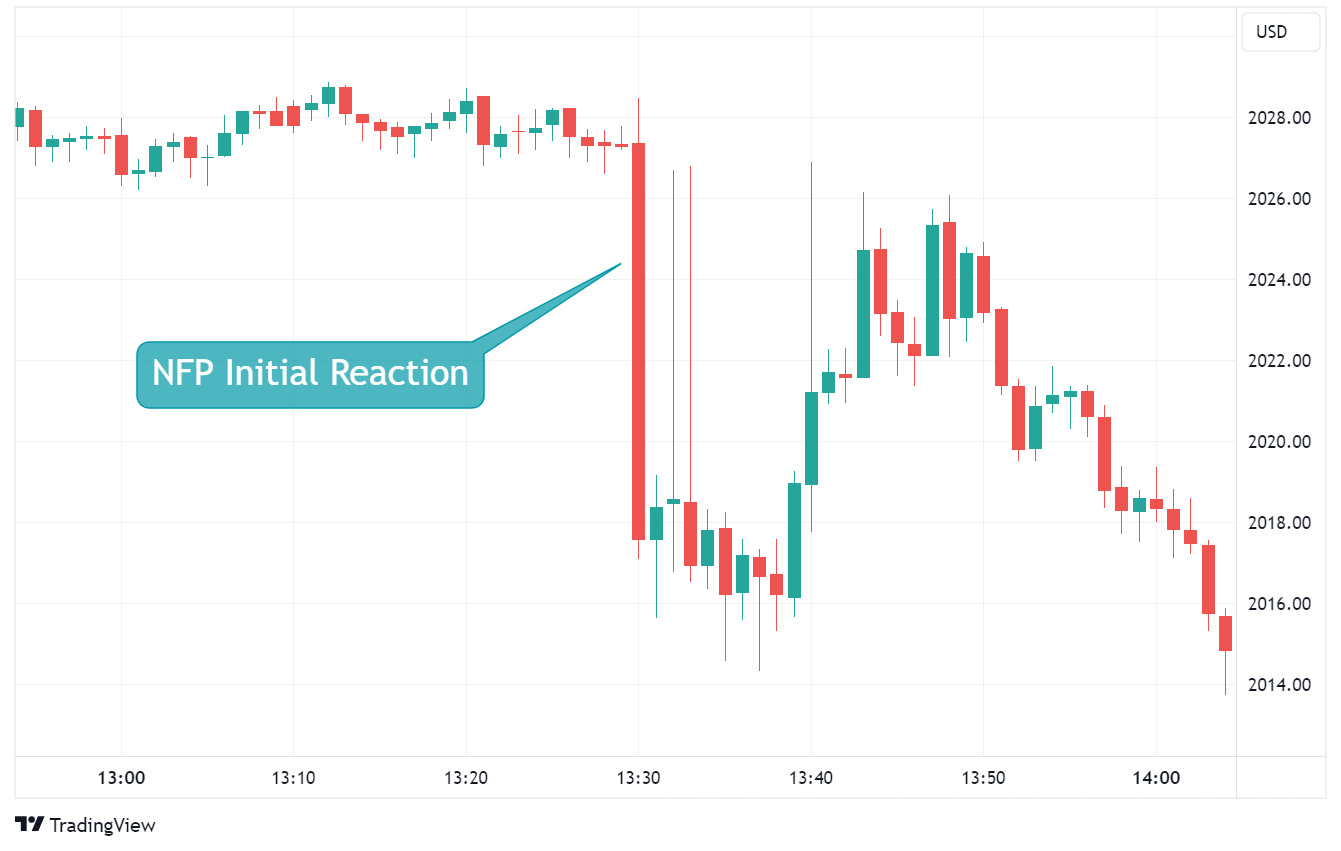
News trading is a strategy where traders aim to profit from volatility triggered by important news events or economic data releases.
- Setup : Track an economic calendar for high-impact releases, such as interest rate changes, employment numbers (e.g., US NFP), CPI inflation figures, and GDP reports.
- Trigger : Have a trading plan ready to enter trades when official figures come out significantly higher or lower than market forecasts.
- Considerations : Important news can cause rapid price jumps and slippage. Using stop-loss orders helps limit risk during fast-moving market conditions.
4. High-frequency trading
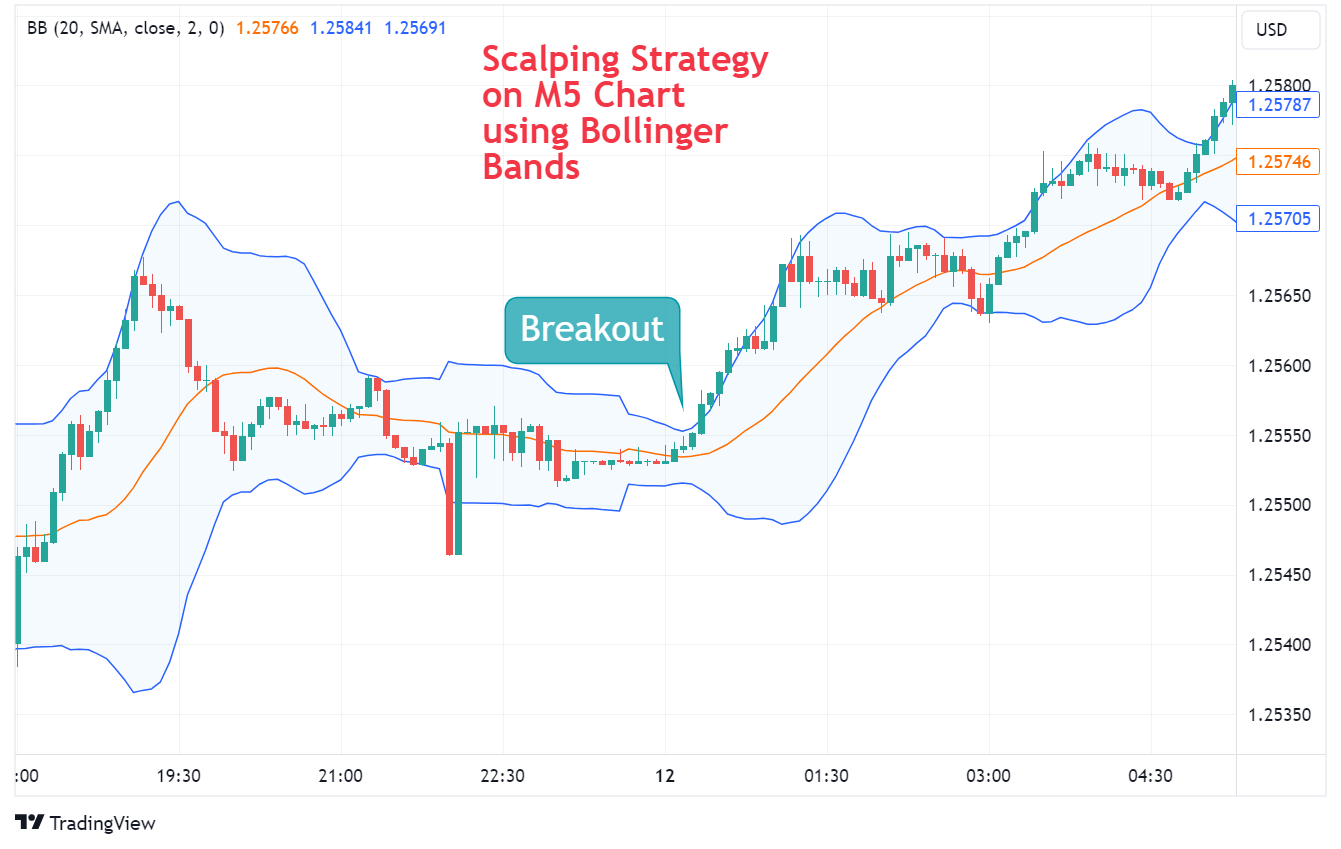
High-frequency trading focuses on capturing small price moves over very short holding periods, lasting from a few seconds to a few minutes.
- Setup : Monitor short timeframes (such as 1-minute or 5-minute charts) alongside market depth, order book activity, and bid-ask spread behaviour.
- Requirements : Relies on fast platform execution, low latency, tight spreads, and deep market liquidity across active markets.
- Target : Aims to lock in small price gains across multiple trades each day while maintaining tight stop-loss orders to limit risk.
5. Algorithmic trading systems
An algorithmic day trading system uses software tools like Autochartist to continuously scan price action across multiple instruments, alerting traders when specific chart patterns, key support/resistance levels, or statistical setups occur.
- Benefits : Saves significant analysis time by automating technical analysis, removing manual charting work, and delivering real-time alerts.
- Risk control: Uses historical volatility data to project price targets and stop-loss levels, requiring backtesting and demo testing to ensure setups adapt to changing market conditions.
Building a disciplined day trading system
A long-term day trading system needs clear risk rules to protect your capital.
Position sizing & the 1% risk rule
The 1% risk rule states that a trader should never risk more than 1% of their total account balance on a single trade.
Calculate position size using entry price and stop-loss distance:
Position Size = [Account Equity X Risk %] / [Entry Price - Stop-Loss Price]
Example : Risking $100 on an asset priced at $50 with a stop-loss at $48 ($2 risk per share) results in a position size of 50 shares ($100 / $2).
Managing drawdown and avoiding overtrading
While the 1% rule controls single-trade risk, a maximum daily drawdown threshold (typically 2%–3% of total account equity) caps total daily trading losses . Hitting this daily limit requires immediately closing open positions and halting all trading for the rest of the session to preserve capital and prevent revenge trading during challenging market conditions.
Selecting & testing intraday trading techniques
Your strategy only works if it fits how you actually trade.
1. Matching strategy to your schedule and screen time
Not every strategy requires monitoring charts for 8 to 10 hours a day. Traders with limited time can focus on specific active windows, such as trading the first 1 to 2 hours of the London or New York session opens, or trade specifically around scheduled economic news events.
The scale of activity in these windows is significant. According to the BIS Triennial Central Bank Survey (2025) , global OTC forex trading averaged $9.6 trillion per day in April 2025. The United Kingdom and United States together account for approximately 57% of that volume, with the UK alone handling around 38% of daily global forex turnover. The London-New York overlap concentrates the bulk of this liquidity into a four-hour window, producing the tightest spreads and most defined intraday price movement of the trading day.
2. Decision speed and volatility tolerance
Different trading strategies require different decision speeds and levels of emotional control. High-volatility strategies, such as news trading and high-frequency trading, require you to make quick decisions in seconds as prices move rapidly. These methods work best for traders who are comfortable with fast-paced price action and sudden market shifts and high volatility.
On the other hand, lower-volatility strategies like range trading produce fewer signals and focus on calmer price movements. These strategies allow you more time to review chart levels, double-check your setup, and place trades without feeling rushed by the market.
3. Backtesting and demo account practice
Before committing live funds, test your strategy's entry, exit, and risk rules on historical chart data. Practising on a free demo account lets you experience the real-time pace of your chosen strategy, test technical indicators (VWAP, RSI, moving averages), and confirm whether the trading style fits your routine without financial risk.
Selecting a broker: execution quality and platform infrastructure
For day traders specifically, execution speed directly affects the price you get. Key considerations include:
- Regulatory oversight: Verify licensing under recognised authorities (such as the FCA, ASIC, DFSA, or CySEC) to ensure client fund segregation and fair dispute resolution procedures.
- Execution quality and pricing : Evaluate spread structures, commission models, and execution speeds to minimise slippage on fast-moving orders. Axi connects directly to 20+ top-tier liquidity providers via co-located servers, bypassing the additional latency layers of traditional ECN connections. During fast-moving sessions like the London-New York overlap, that difference shows up in tighter spreads and less slippage on time-sensitive entries.
- Platform infrastructure: Ensure access to high-performance platforms (such as MetaTrader 4, MetaTrader 5, and the Axi Trading Platform) with reliable charting capabilities and automated execution support.
- Market access and order types: Check for diverse market coverage (forex, commodities, indices, shares, ETFs, and crypto) alongside flexible risk management order types.
Account requirements and regulatory frameworks
Leverage limits, margin rules, and account parameters vary depending on the governing regulatory jurisdiction:
Tier-1 regulated jurisdictions (e.g., FCA, ASIC, CySEC, DFSA) enforce strict retail leverage caps (ranging from up to 30:1 for major currency pairs down to 2:1 for cryptocurrencies, or up to 50:1 under specific regional frameworks), mandatory negative balance protection, and standardised 50% margin close-out thresholds.
International entities apply different leverage models, execution structures, and client protections depending on client classification and specific entity parameters.
Axi Market Analyst Milan Cutkovic says:
"Most traders spend too much time hunting for the perfect entry and not enough on what happens once they're in the trade. Pick one strategy that suits your schedule, whether that's trading the London open or waiting for a big data release, and stick with it long enough to learn how it actually behaves. Keep your risk reasonable, and when you hit your daily loss limit, close the platform and come back tomorrow. And put in proper time on a demo account first, because the market will still be there when you're ready."
Ready to trade your edge?
Join thousands of traders and trade CFDs on forex , shares , indices , commodities , and cryptocurrencies !
Images are for illustrative purposes only. This information is not to be construed as a recommendation; or an offer to buy or sell; or the solicitation of an offer to buy or sell any security, financial product, or instrument; or to participate in any trading strategy. It has been prepared without taking your objectives, financial situation and needs into account. Any references to past performance and forecasts are not reliable indicators of future results. Axi makes no representation and assumes no liability with regard to the accuracy and completeness of the content in this publication. Readers should seek their own advice.
FAQs
Day traders open and close positions within the same day, while swing traders hold trades for several days or weeks to capture broader price movements. Swing trading generally requires less continuous chart monitoring but exposes positions to overnight price gaps and may incur overnight financing costs.

Axi Team
The Axi team brings together specialists with decades of experience across every major financial sector. As authors of our expert articles and trading guides, we share insight into forex education, the stock market, and commodities. We use this collective knowledge to provide the practical perspective needed to navigate the markets effectively.