A strong currency is one that has a high value relative to other currencies in the global market. It is typically backed by a stable economy and is sought after for international trade and investment.
While the US dollar is the world's most traded currency, accepted in several countries across the globe, and serves as an unofficial global reserve currency, there are at least 10 currencies worth more than the USD on a per-unit exchange-rate basis. The highest currency in the world currently is the Kuwaiti dinar (KWD), followed by the Bahraini dinar (BHD) and the Omani rial (OMR).
Top 10 strongest currencies in the world (valued against the USD)
# | Currency | Value of | Value in USD* |
| 1 | Kuwaiti dinar | 1 KWD | 3.21 |
| 2 | Bahraini dinar | 1 BHD | 2.66 |
| 3 | Omani rial | 1 OMR | 2.60 |
| 4 | Jordanian dinar | 1 JOD | 1.41 |
| 5 | British pound | 1 GBP | 1.32 |
| 6 | Gibraltar pound | 1 GIP | 1.32 |
| 7 | Falkland Islands pound | 1 FKP | 1.32 |
| 8 | Saint Helena pound | 1 SHP | 1.32 |
| 9 | Cayman Islands dollar | 1 KYD | 1.20 |
| 10 | Swiss franc | 1 CHF | 1.19 |
* Updated in real time.
Overview of selected high-value currencies (against the USD)
The profiles below explain selected high-valued currencies and include the US dollar as a reference currency. They do not exactly match the membership or order of the table above.
- Kuwaiti dinar (KWD)
- Bahraini dinar (BHD)
- Omani rial (OMR)
- Jordanian dinar (JOD)
- British pound (GBP)
- Gibraltar pound (GIP)
- Cayman Islands dollar (KYD)
- Swiss franc (CHF)
- Euro (EUR)
- United States dollar (USD)
Kuwaiti dinar (KWD)
(strongest currency in the world)
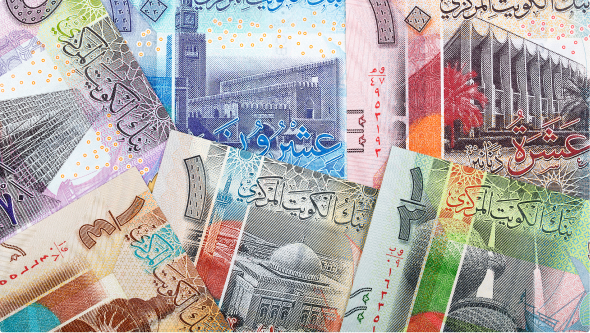
The Kuwaiti dinar (KWD) has been the official currency of Kuwait since 1961 when it replaced the Gulf rupee. The Kuwaiti dinar is one of the highest-valued currencies in the world and its symbol is "KD" or "د.ك" in Arabic.
The exchange rate of the Kuwaiti dinar is high compared to most other currencies. Unlike other Gulf Cooperation Council (GCC) countries, the currency is not pegged to the US dollar alone, but to an undisclosed basket of international currencies. While the exact weighting of the US dollar is not known, it is assumed that it is high due to Kuwait's dependence on oil, which is priced in USD. The value of the Kuwaiti dinar fluctuates only slightly.
The Kuwaiti dinar is primarily used in Kuwait, and its banknotes are rarely circulated outside the country.
The Kuwaiti dinar is divided into 1,000 fils and is available in banknotes with denominations of 1/4, 1/2, 1, 5, 10, and 20 dinars. Each banknote features various images, including landmarks and cultural symbols significant to Kuwait.
Bahraini dinar (BHD)
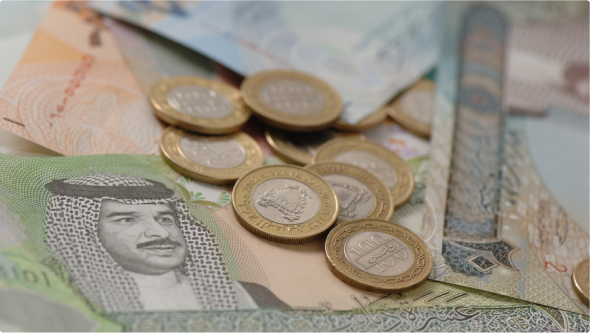
The Bahraini dinar (BHD) is the official currency of the Kingdom of Bahrain, an island nation located in the Middle East. It has been the currency of Bahrain since 1965, replacing the Gulf Rupee. The Bahraini dinar is known for its high value and stability. The symbol for the Bahraini dinar is "BD" or "د.ب," in Arabic.
The Bahraini dinar is pegged against the US dollar at a rate of 2.659 USD. The value of the BHD, therefore, fluctuates very rarely.
Bahrain has no currency controls in place, which allows the free movement of capital. While the BHD is accepted internationally, it is primarily used within Bahrain.
The Bahraini dinar is divided into 1,000 fils. However, prices are typically quoted in dinars. The Bahraini dinar is available in banknotes with denominations of 1/2, 1, 5, 10, and 20 dinars. Coins are also in circulation with denominations of 5, 10, 25, 50, and 100 fils. The banknotes and coins feature images of important Bahraini landmarks, historical figures, and cultural symbols.
Omani rial (OMR)
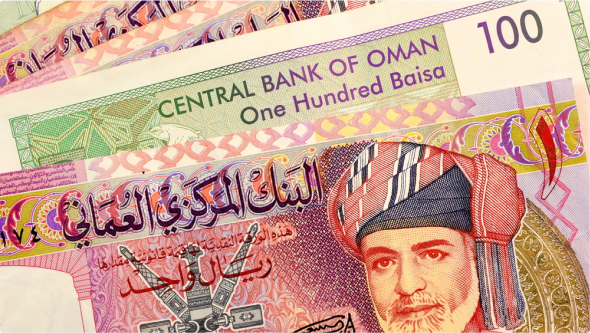
The Omani rial (OMR) is the official currency of the Sultanate of Oman, a country located in the Middle East. It replaced the Indian rupee – Oman´s previous currency – in 1970. Omani rial is known for its high value and stability. The symbol for the Omani rial is OMR or "ر.ع." in Arabic.
The Omani rial is pegged to the US dollar at an exchange rate of 2.597 USD and fluctuates minimally. Oman has liberal currency controls compared to the rest of the region.
The Omani rial is divided into 1,000 baisa, although prices are usually quoted in rials. The Omani rial is available in banknotes with denominations of 1, 5, 10, 20, and 50 rials. Coins are issued in denominations of 5, 10, 25, and 50 baisa. The banknotes and coins feature images of significant Omani landmarks.
Jordanian dinar (JOD)
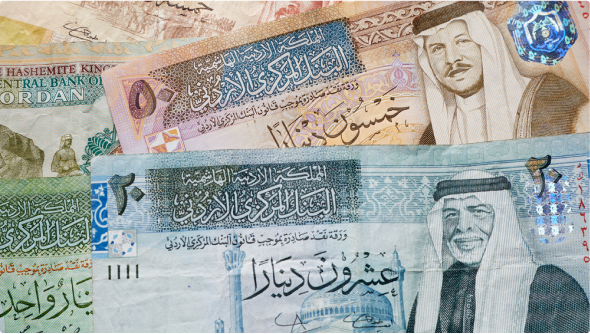
The Jordanian dinar (JOD) is the official currency of the Hashemite Kingdom of Jordan, a country located in the Middle East. Its symbol is “JD”. The dinar is divided into 100 smaller units known as "piasters" or "qirsh," represented by the symbol "قرش" in Arabic.
The Jordanian currency was introduced in 1950, just four years after the Hashemite Kingdom of Jordan was established.
Unlike other Middle Eastern countries that pegged their currencies to the US dollar, Jordan is not a major oil-producing country. It maintains the peg to keep the economy stable, inflation under control and to make international trade smoother. Jordan´s central bank is maintaining a fixed exchange rate of 1 JOD = 1.41 USD.
Jordanian banknotes are issued in denominations of 1, 5, 10, 20, and 50 dinars. Coins are issued as 1 dinar, 1/2 dinar, 1/4 dinar, and smaller denominations in piasters (5, 10, 25, and 50 piasters).
British pound (GBP)
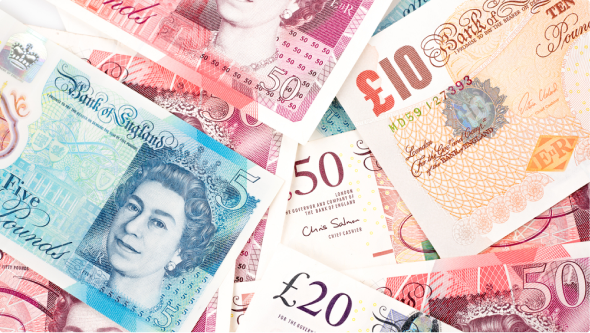
The British pound, also known as pound sterling (GBP), is the official currency of the United Kingdom. It is one of the oldest currencies in the world and plays a significant role in the global economy. Its symbol is "£".
Along with the euro and the US dollar, the British pound is one of the world's main reserve currencies. The pound played a significant role in global trade and finance during the British Empire. Today, it maintains its status as a major currency, supported by the UK's economy and its role as an international financial centre.
The exchange rate of the British pound fluctuates against other major currencies. It is influenced by factors including interest rates, inflation, economic indicators and geopolitical events.
The central bank of the United Kingdom is the Bank of England. Founded in 1694, it conducts monetary policy and works to maintain monetary and financial stability.
The British pound has experienced periods of major volatility. In September 2022, it fell close to US$1.03 after the Truss government unveiled plans to increase borrowing while cutting taxes. Before that, sterling experienced prolonged volatility ahead of and during the Brexit process. In 1992, the UK withdrew the pound from the European Exchange Rate Mechanism (ERM), an event commonly known as "Black Wednesday".
The British pound is divided into 100 pence. Bank of England banknotes are issued in denominations of £5, £10, £20, and £50. Coins are available as 1p, 2p, 5p, 10p, 20p, 50p, £1, and £2.
Gibraltar pound (GIP)
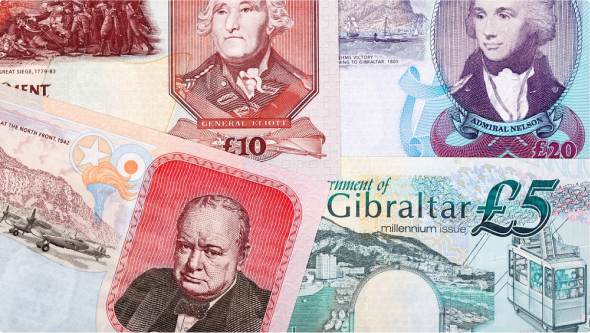
The Gibraltar pound (GIP) is the official currency of Gibraltar, a British Overseas Territory located in southern Europe. Gibraltar issues its own banknotes and coins. The currency is pegged to the British pound (GBP) at a 1:1 exchange rate, meaning that one Gibraltar pound is equivalent in value to one British pound. The currency symbol for the Gibraltar pound is "£," which is the same as the symbol for the British pound.
The Gibraltar pound is legal tender within Gibraltar, and both Gibraltar pounds and British pounds are widely accepted for transactions on the territory. However, Gibraltar-issued notes and coins are not usually accepted in the United Kingdom, and acceptance outside Gibraltar is limited.
The Gibraltar pound is seen as a stable currency due to its peg to the British pound. The peg is beneficial for Gibraltar as it maintains a very close relationship with the United Kingdom.
The Gibraltar pound is divided into 100 smaller units called "pence". The Government of Gibraltar issues banknotes in denominations of £5, £10, £20, £50, and £100. Coins are issued as 1p, 2p, 5p, 10p, 20p, 50p, £1, and £2. The banknotes have designs unique to Gibraltar, featuring local landmarks and symbols.
Cayman Islands dollar (KYD)
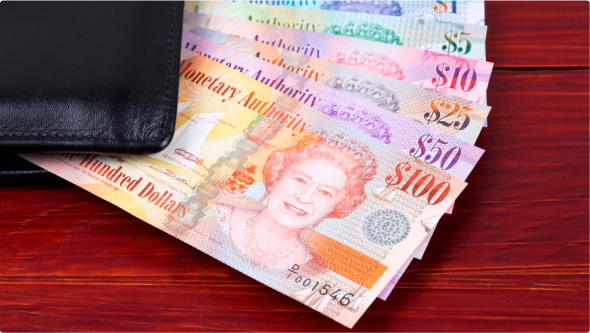
The Cayman Islands dollar (KYD) is the official currency of the Cayman Islands, a British Overseas Territory located in the Caribbean. The currency is abbreviated as "CI$" to distinguish it from other dollar-denominated currencies. The Cayman Islands dollar is issued and regulated by the Cayman Islands Monetary Authority.
The Cayman Islands dollar is pegged to the US dollar at a fixed exchange rate of CI$1 = US$1.20. This is beneficial for Cayman Islands´ financial sector, which is famous for its offshore banking and investment services.
It is divided into 100 smaller units called "cents". The Cayman Islands Monetary Authority issues banknotes in denominations of CI$1, CI$5, CI$10, CI$25, CI$50, and CI$100. Circulating coins are issued in denominations of 1 cent, 5 cents, 10 cents, and 25 cents.
Swiss franc (CHF)
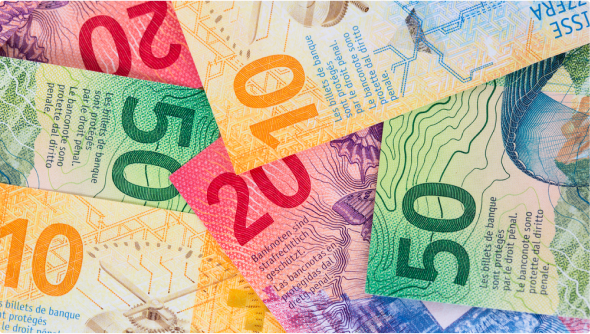
The Swiss franc (CHF) is the official currency of Switzerland and Liechtenstein. It is one of the world's major reserve currencies and is famous for its stability and status as a safe haven. The symbol for the Swiss franc is "CHF".
Switzerland decided to abandon the gold standard in 2000. However, the Swiss National Bank (SNB) has frequently intervened in the foreign exchange markets and at times, maintained a soft peg against the euro, ensuring that one euro is not valued below a certain level in Swiss francs.
The Swiss franc is widely accepted in international transactions. Many central banks and government institutions around the world hold Swiss Francs as part of their reserve assets due to its stability.
Switzerland's status as a popular tourist destination is another factor boosting demand for the Swiss franc.
The Swiss franc is divided into 100 smaller units called "centimes" in French or "rappen" in German. The SNB issues banknotes in various denominations, including 10, 20, 50, 100, 200, and 1,000 Swiss francs. The 1,000 banknote is one of the highest-value banknotes currently circulating. Coins are issued as 5, 10, 20, and 50 centimes, as well as 1, 2, and 5 francs.
Euro (EUR)
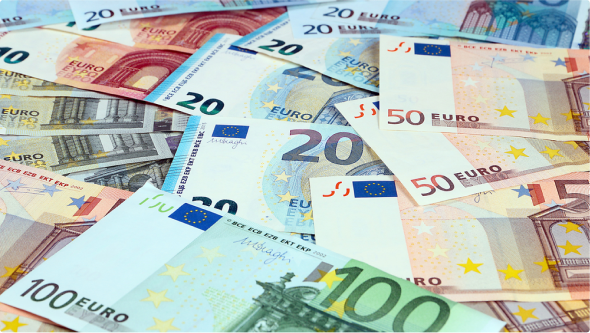
The euro (EUR) is the official currency of the euro area, a monetary union comprising the majority of European Union member states. It is one of the world's major reserve currencies and is the second most widely held reserve currency after the US dollar.
The euro was introduced on January 1, 1999, initially for electronic transactions and accounting purposes. Euro banknotes and coins entered circulation on January 1, 2002, replacing the national currencies of the participating countries. Its symbol is "€".
The euro is a floating currency, and its exchange rate is determined by market forces. Its value is influenced by economic conditions and monetary policy across the euro area, as well as developments in other major economies.
The euro is divided into 100 cents. Euro banknotes and coins feature shared European designs, while the national sides of coins reflect the participating countries.
United States dollar (USD)
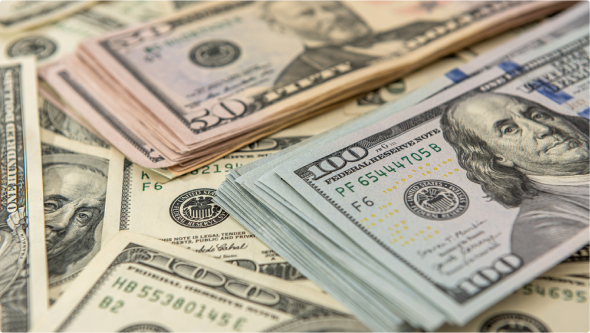
The US dollar (USD) is the official currency of the United States of America and the world's most widely held reserve currency. Its symbol is "$".
The US dollar has a dominant role in international trade and finance. It is held as a reserve currency and widely used in international transactions. Countries that peg their currencies often use the US dollar as the anchor currency, including most members of the Gulf Cooperation Council.
The dollar serves as the reference currency for the ranking above. A currency having a higher nominal value per unit than the dollar does not make it more widely used or more important in global finance.
The exchange rate of the US dollar against floating currencies is determined in the foreign exchange market. Influences include interest rates, inflation, economic indicators, geopolitical events and investor sentiment.
The US dollar is divided into 100 cents. Common banknote denominations include $1, $5, $10, $20, $50, and $100.
Frequently asked questions
What is the strongest currency in the world?
The Kuwaiti dinar is the strongest currency in the world and it has been the official currency of Kuwait since 1961, when it replaced the Gulf rupee.
In this context, "strongest" means the highest exchange value per unit. It does not mean that the currency is the most widely traded, has gained the most value recently or belongs to the world's largest economy.
Read also: Top 10 Weakest & Lowest Currencies in the World
Is the US dollar the strongest currency in the world?
No. The US dollar is the most traded and one of the most powerful reserve currencies, but it is not the most valuable currency by exchange rate. Several currencies, including the Kuwaiti dinar, Bahraini dinar and Omani rial, are worth more than one US dollar per unit.
Does a higher exchange rate mean a stronger economy?
No. The value of a single currency unit depends largely on how that unit is defined. A currency worth more than one US dollar does not automatically indicate a larger, wealthier, or faster-growing economy.
For example, a country can redenominate its currency by replacing many old units with one new unit. This raises its quoted exchange rate without increasing what people can actually buy. Measuring true economic strength requires broader metrics, such as Gross Domestic Product (GDP), inflation, employment, and productivity.
Related reading: Top 10 Largest Economies in the World by GDP
Where do the Euro and the US Dollar rank?
The Euro (EUR) and the US Dollar (USD) sit just outside the top 10. Following them are currencies pegged 1:1 to the US Dollar:
# | Currency | Value of | Value in USD** |
| 11 | Euro | 1 EUR | 1.10 |
| 12 | United States dollar | 1 USD | 1.00 |
| 13 | Bermudian dollar | 1 BMD | 1.00 |
| 14 | Bahamian dollar | 1 BSD | 1.00 |
| 15 | Panamanian balboa | 1 PAB | 1.00 |
Why are the Guernsey, Jersey and Manx pounds not listed separately?
Guernsey, Jersey and the Isle of Man issue their own local pounds, maintained at parity with the British pound. Although they are often identified by the unofficial codes GGP, JEP and IMP, respectively, they do not have separate ISO 4217 currency codes. For this ranking, they are grouped under pound sterling (GBP).
On the contrary, the Falkland Islands pound (FKP), Gibraltar pound (GIP) and Saint Helena pound (SHP) have their own ISO 4217 codes and are treated as separate currencies in our methodology. Their inclusion does not imply that they are worth more than sterling.
Ready to trade your edge?
Join thousands of traders and trade CFDs on forex, shares, indices, commodities, and cryptocurrencies!
The data is sourced from third-party providers. This information is not to be construed as a recommendation; or an offer to buy or sell; or the solicitation of an offer to buy or sell any security, financial product, or instrument; or to participate in any trading strategy. It has been prepared without taking your objectives, financial situation, or needs into account. Any references to past performance and forecasts are not reliable indicators of future results. Axi makes no representation and assumes no liability regarding the accuracy and completeness of the content in this publication. Readers should seek their own advice.

Milan Cutkovic
Milan Cutkovic is an experienced trader and market analyst specializing in forex, indices, commodities, and stocks. He was one of the first traders accepted into the Axi Select program, which identifies talented traders and supports their professional development.
He is passionate about helping others improve their trading skills through educational articles, eBooks, and content published on the Axi blog. His work is regularly featured and quoted in major international media outlets, including Yahoo Finance, Business Insider, Barron's, CNN, Reuters, New York Post, and MarketWatch.